

By: Candice Givens - Walden University
Opioid Trend in Virginia
The trend in my community of Norfolk Virginia is the misuse of opioids. According to the Virginia Department of Health, in 2025 there were 148 opioid overdose deaths among African American individuals and 274 deaths among Caucasian individuals (Virginia Department of Health, 2026). Many of these deaths occurred among individuals between the ages of 20 and 55 (Virginia Department of Health, 2026).
Effects on the Brain
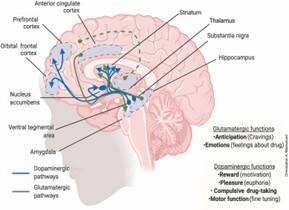
Neurobiological Effects – Opioid use is associated with a decrease in functional connectivity between the frontal cortex and structures within the basal ganglia region. Opioids stimulate the release of dopamine in dopaminergic reward-related areas of the brain, reinforcing drug-seeking behavior (Blackwood & Cadet, 2021). Repeated exposure to these substances leads to structural and functional alterations in the brain (Blackwood & Cadet, 2021). Such neurobiological adaptations are responsible for many of the behavioral manifestations of OUD, including compulsive drug use, impaired decision-making, and intense cravings (Blackwood & Cadet, 2021).
Psychological Effects – Opioid misuse can lead to significant psychological and cognitive effects. Individuals may experience mood swings, impaired cognitive functioning, and reduced decision-making abilities, which can make even simple tasks challenging to complete (Blackwood & Cadet, 2021). In addition, opioid use is commonly associated with increased levels of anxiety, depression, and difficulty concentrating (Blackwood & Cadet, 2021) These mental health and cognitive impairments can interfere with daily functioning, relationships, and overall quality of life (Blackwood & Cadet, 2021).
Addictive Effects:
Over time, individuals who misuse opioids often develop tolerance. As use continues, the body can become physically dependent on the substance (Blackwood & Cadet, 2021). When opioid use is reduced or stopped, withdrawal symptoms may occur, including nausea, vomiting, muscle aches, anxiety, and insomnia (Blackwood & Cadet, 2021). Additionally, as tolerance and dependence increase, individuals face a heightened risk of overdose, especially when higher doses are taken (Blackwood & Cadet, 2021).


Families affected by opioid misuse often experience profound loss, emotional distress, and financial strain, which can create hardship and instability. The emotional impact of addiction on family members can be significant, leading to increased levels of anxiety, depression, and feelings of helplessness.
What are the current efforts to address this trend?
On September 26, 2014, Terry McAuliffe signed Executive Order 29, which established the Governor’s Task Force on Prescription Drug and Heroin Abuse (Virginia Department of Health Professions, n.d.). This task force was created to develop immediate strategies to address the growing epidemic of prescription opioid and heroin misuse in Virginia, with the ultimate goal of improving both public safety and public health (Virginia Department of Health Professions, n.d.). In response to the continuing opioid crisis, the Commonwealth of Virginia also established the Virginia Opioid Abatement Authority (Virginia Department of Health Professions, n.d.). This authority provides funding through grants to support agencies and organizations that focus on prevention, treatment, and recovery services aimed at reducing the prevalence of Opioid Use Disorder throughout the state (Virginia Department of Health Professions, n.d.).

What treatments are available?
The Commonwealth of Virginia has implemented several initiatives and treatment services to address the opioid crisis. The state has licensed numerous treatment facilities that provide an array of services for individuals experiencing substance use disorders (Virginia Department of Behavioral Health and Developmental Services, n.d.). Virginia has developed mobile methadone units that expand access to treatment by offering medication assisted treatment, counseling, peer support, harm reduction services, and physical examinations and health screenings (Virginia Department of Behavioral Health and Developmental Services, n.d.) These mobile services help reach individuals who may have limited access to treatment facilities. Furthermore, the state has implemented the REVIVE! Opioid Overdose and Naloxone Education Program, an educational program that trains individuals to recognize and respond to opioid overdose emergencies (Virginia Department of Behavioral Health and Developmental Services, n.d.). The program teaches individuals how to administer Naloxone, a lifesaving medication that can reverse opioid overdoses (Virginia Department of Behavioral Health and Developmental Services, n.d.). Naloxone is available at no cost with a physician’s order through local health departments across the state (Virginia Department of Behavioral Health and Developmental Services, n.d.).

How was addiction presented in media?
Addiction to opioids has also resulted in significant economic losses for the Commonwealth of Virginia. Communities such as Petersburg, Richmond, Hopewell, and the broader Central Virginia region have experienced notable financial impacts related to opioid misuse (Nwoko, 2025). These economic losses stem from reduced workplace productivity, lost wages, and the broader economic consequences associated with fatal overdoses (Nwoko, 2025). In addition, the loss of life caused by opioid overdoses further contributes to the long-term economic burden placed on communities and the state.
How would you expand the perspective being offered?
This perspective could be further expanded by discussing successful initiatives and recovery stories throughout the Commonwealth of Virginia. The examples of effective programs and treatment services would demonstrate how current efforts are helping individuals overcome addiction and rebuild their lives. These successes can show how treatment and prevention initiatives supported by organizations such as the Virginia Opioid Abatement Authority and the Virginia Department of Health are contributing to saving lives, recovery efforts, and helping restore stability within families and communities affected by Opioid Use Disorder.
References:
Blackwood, C. A., & Cadet, J. L. (2021). The molecular neurobiology and neuropathology of opioid use disorder. Current Research in Neurobiology, 2, 100023. https://doi.org/10.1016/j.crneur.2021.100023
Nwoko, A. J. (2025, November 14). Virginia’s opioid crisis cost $5.2 billion in 2023, but recovery investments show promise. WTVR CBS 6 News. https://www.wtvr.com/news/local-news/virginia-opioid-crisis-update-nov-14-2025
Virginia Department of Behavioral Health and Developmental Services. (n.d.). Substance use services for individuals and families. https://dbhds.virginia.gov/substance-use-services-for-individuals-and-families/
Virginia Department of Health. (2026). Drug overdose deaths. Virginia Department of Health. https://www.vdh.virginia.gov/drug-overdose-data/overdose-deaths/
Virginia Department of Health Professions. (n.d.). Governor’s Task Force on Prescription Drug and Heroin Abuse. https://www.dhp.virginia.gov/taskforce/
Create Your Own Website With Webador